

General Info about Gemini
Name: Gemini# Markets: 141Founded: 2014Founders: Tyler and Cameron WinklevossWebsite: https://gemini.com/Twitter: @GeminiFinancial Reserves: NOT Verified
Gemini is a cryptocurrency exchange founded in 2014 by the Winklevoss twins (Cameron and Tyler Winklevoss). It is based in New York, USA and is known for its focus on compliance and security.
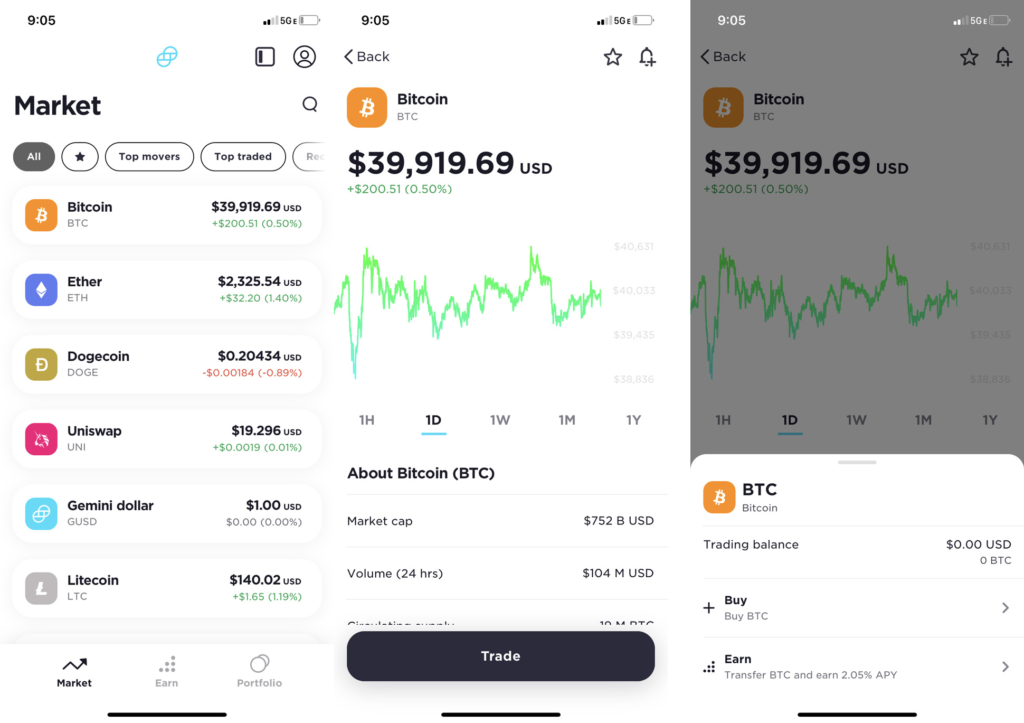
Gemini allows users to buy, sell and store a variety of digital assets, including Bitcoin, Ethereum and Litecoin. The exchange is also known for its easy-to-use interface, making it a great option for beginners. Gemini is also known for its institutional-grade infrastructure, which is designed to protect investors by providing a high level of security, compliance, and regulatory oversight.
Gemini is considered a trusted and reliable exchange and is regulated by the New York State Department of Financial Services (NYDFS). It is one of the first exchanges to receive a BitLicense, a business license issued by the NYDFS to companies that conduct business related to bitcoin and other cryptocurrencies.
In addition to crypto trading, Gemini also offers a crypto custody service that allows institutions to store their digital assets in a highly secure and insured manner.
Other notable events of the exchange’s history include:
- In 2018, Gemini launched its own stablecoin, Gemini Dollar (GUSD), an ERC20 token that maintains a 1:1 peg to the U.S. dollar and is backed by U.S. dollars held at State Street Bank and Trust Company.
- Towards the end of 2018, Gemini launched its mobile app for traders.
- In November 2019, Gemini Trust Company acquired Nifty Gateway, a popular platform for non-fungible tokens (NFTs).
- In late 2019, Gemini mobile app added support for Apple Watch and Android Wear.
- In 2020, Gemini established a banking partnership with JP Morgan.
- In May 2020, Gemini became the first US cryptocurrency exchange to Integrate with Samsung Blockchain Wallet.
- Also in May 2020, Gemini launched a Bitcoin-based retirement plan service for employees in partnership with Bitwage.
Pros and Cons
Pros:
– Highly secure exchange
– Available in over 50 countries
– Fiat-to-crypto onramp
– Institutional-grade custody and OTC desk
Cons:
– Limited selection of cryptocurrencies
– Low privacy
– Complicated fee structure
– No margin trading
Gemini Review: Key Features
Gemini is a top cryptocurrency exchange designed with security in mind. Key features of the exchange include:
- Fiat-to-crypto onramp for beginners and experienced traders. Gemini is easy enough for beginners and retail traders to use, but includes advanced trading options for professionals.
- Gemini Custody and OTC Desk. Institutional investors can take advantage of Gemini’s market and security infrastructure.
- Free deposits and withdrawals. Gemini charges no additional fees for both crypto and fiat deposits and withdrawals unless you exceed certain transaction limits, which is great for retail traders.
- Excellent customer support. You will receive a response to your inquiry in less than two hours during off-peak hours.
Countries supported
Gemini is primarily a United States-based exchange and operates in all US states. In addition to the United States, Gemini is available in more than 50 other countries, including:
- North America: Canada, Cayman Islands, British Virgin Islands.
- South America: Argentina, Brazil, Chile, Peru.
- Europe: Austria, Belgium, Bulgaria, Croatia, Cyprus, Czech Republic, Denmark, Estonia, Finland, Greece, Guernsey, Hungary, Iceland, Ireland, Italy, Jersey, Latvia, Liechtenstein, Lithuania, Luxembourg, Malta, Norway, Poland, Portugal, Romania, Slovakia, Spain, Sweden, Switzerland, United Kingdom.
- Asia: Hong Kong, India, Israel, Myanmar, Philippines, Singapore, South Korea, Taiwan, Turkey, Vietnam.
- Oceania: Australia and New Zealand.
- Africa: Egypt, Nigeria and South Africa.
When customers sign up for a Gemini account, applicable regulations require that the following information be collected: full legal name, date of birth, address, phone number, social security number, and email. Additional documentation is required for full verification and withdrawal from the exchange. These documents include
- U.S. residents: A valid passport or driver’s license.
- International residents: Depending on your country of residence, we require at least two government-issued documents: a valid passport, driver’s license, and/or national identification card.
- Canadian residents: A valid passport, driver’s license, and social security number.
Identity verification at Gemini requires a fairly extensive set of documents, but you can expect your account to be verified within 1 to 3 business days. Additional requests may extend the verification time from 2 to 5 business days.
Is Gemini Secure?
Gemini is known for its focus on security and compliance. The exchange uses a variety of security measures to protect user’s assets and personal information, including:
- Two-factor authentication (2FA) for all account logins and withdrawals
- Multisignature technology for all digital assets stored in cold storage
- Regular security audits and penetration testing
- A bug bounty program to encourage external security researchers to report vulnerabilities
- Regular security training for employees
- Encrypted communication via HTTPS and SSL
In addition, Gemini is a regulated exchange overseen by the New York State Department of Financial Services (NYDFS). It’s the first exchange to receive a BitLicense, which is a business license issued by the NYDFS for companies that conduct business related to bitcoin and other cryptocurrencies. This means that the exchange is subject to regular audits and must follow strict security and compliance protocols.
It’s important to remember that no exchange can guarantee 100% security, and users should always take their own precautions to protect their assets, such as using a hardware wallet.
In general, Gemini is considered a safe and secure option for trading and storing digital assets.
Crypto Exchange FAQ
What is a Crypto Exchange?
A cryptocurrency exchange, or simply crypto exchange, is a platform that allows users to buy, sell, and trade cryptocurrencies. These exchanges act as an intermediary between buyers and sellers, matching orders and facilitating trades.
Crypto exchanges can be centralized or decentralized. Centralized exchanges (CEX) are operated by one company and are the most common type of exchange. They offer the convenience of a simple and user-friendly platform, but come with the risk of a central point of control and failure. Decentralized exchanges (DEX) are run on a blockchain and operated by a smart contract, they offer more autonomy and control to users, but can be less user-friendly and may not have as much liquidity.
Crypto exchanges offer a variety of trading pairs, which are the different cryptocurrencies that can be traded on the platform. Some popular pairs include bitcoin (BTC) and ethereum (ETH), bitcoin cash (BCH) and litecoin (LTC), and others.
Exchanges also charge a fee for trades, which is called a trading fee. The trading fee varies from exchange to exchange and can be based on the maker-taker model, the volume of the trade, or a flat fee.
Some popular crypto exchanges are Binance, Coinbase, Kraken and Bitfinex. It's worth noting that it's important to do your own research and consider all the factors involved before using any exchange, and to make sure you keep your recovery seed and private keys safe and your computer and mobile device free of malware.
How to Choose a Crypto Exchange?
Choosing the right crypto exchange is an important step in getting started with cryptocurrency trading. Here are some factors to consider when choosing a cryptocurrency exchange:
- Jurisdiction: Make sure the exchange is located in a country with a clear legal framework for cryptocurrencies. It's also important to check if the exchange is registered and regulated by all relevant financial authorities.
- Security: Security should be a top priority when choosing an exchange. Look for an exchange that uses industry-standard security measures, such as two-factor authentication, cold storage for holding assets, and regular security audits.
- Reputation: Check the reputation of the exchange by reading reviews from other users and researching the exchange's history and track record.
- Fees: Compare the fees charged by different exchanges for buying, selling, and withdrawing cryptocurrencies. Some exchanges may also charge fees for deposits and withdrawals.
- Payment methods: Consider the payment methods offered by the exchange, such as bank wire, credit/debit card, and e-wallets. Make sure the exchange supports the payment method that is most convenient for you.
- Available cryptocurrencies: Look at the variety of coins and tokens offered in the exchange, check if the exchange offers the coin you are looking for.
- User Interface: Look at the exchange's user interface and trading tools, check if they are easy to use and have the features you need.
- Customer Support: Good customer support is essential, look for exchanges that offer 24/7 support, check the responsiveness of their customer support team and the quality of their responses.
It's important to thoroughly research and compare different exchanges before making a decision, and remember that each exchange has its own set of pros and cons.
WARNING!

The contents of this article are not to be construed as legal, business, investment, or tax advice.
This article is intended for use and should be used for informational purposes only.


3 thoughts on “Gemini”