

Polygon (MATIC) Technical Info
What is Polygon (MATIC)?
Polygon (formerly known as Matic Network) is a decentralized blockchain platform that aims to provide an open and transparent infrastructure for the decentralized web. It is a layer 2 scaling solution for Ethereum, enabling faster and cheaper transactions by moving them from the main Ethereum blockchain to a sidechain.
Polygon operates on a proof of stake (PoS) consensus mechanism, where validators are responsible for validating transactions and creating new blocks. Validators are incentivized to do so by receiving a reward in the form of the platform’s native token, MATIC.
One of Polygon’s main goals is to provide a solution to Ethereum’s scalability issues by enabling faster and cheaper transactions. In addition, Polygon aims to enable the development of a wide range of decentralized applications (dApps) and provide a platform for decentralized finance (DeFi) applications.
It’s important to note that Polygon is considered a relatively new project and its development and implementation is ongoing, so it’s important to be cautious and do your research before making any transactions or decisions.
History of Polygon (MATIC)
Polygon (formerly known as Matic Network) was first launched in 2017 by a team of Indian developers. The project began as a scaling solution for Ethereum, focusing on providing faster and cheaper transactions through the use of sidechains.
In 2019, the team rebranded the project from Matic Network to Polygon, reflecting its broader vision of creating an open and transparent infrastructure for the decentralized web.
In 2020, Polygon began to gain significant traction, with a growing number of decentralized applications (dApps) being built on the platform and a rapidly increasing number of users. This led to a significant increase in the value of the platform’s native token, MATIC.
In 2021, Polygon continues to gain popularity and is considered one of the most active and fast-moving projects in the crypto space, with numerous partnerships, collaborations and an active development team.
It’s important to note that Polygon is considered a relatively new project and its development and implementation is ongoing, so it’s important to be cautious and do your research before making any transactions or decisions.
Polygon (MATIC) in 2021
In 2021, Polygon (MATIC) has seen significant growth and adoption. The price of MATIC increased significantly throughout the year, reaching new all-time highs. The project was one of the best performing cryptocurrencies of the year, with its market capitalization growing from under $1 billion at the start of the year to over $10 billion by the end of the year.
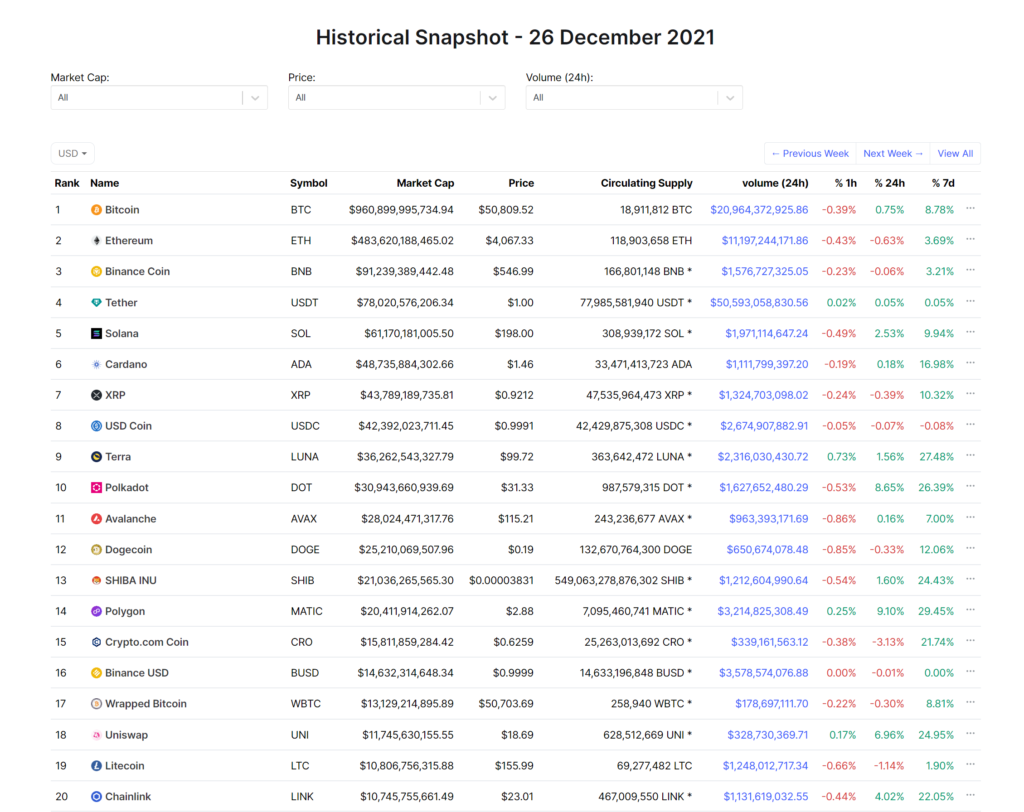
One of the main reasons for this growth is the increasing interest and adoption of Polygon (MATIC) by the decentralized finance (DeFi) community. Polygon’s blockchain network, a layer 2 scaling solution that enables faster and cheaper transactions, has made it a suitable choice for DeFi projects that need to handle high transaction volumes.
In addition, Polygon has been working on several updates and upgrades to the platform, such as the launch of the Surya hard fork, which allows smart contracts to be executed on the Polygon network, and the launch of Ethereum Virtual Machine (EVM) support, which means that existing Ethereum-based projects can be easily ported to the Polygon network.
Another factor that has contributed to Polygon’s growth is the increasing institutional interest in the cryptocurrency, with several institutions investing in Polygon and also using its technology.
Overall, 2021 has been a successful year for Polygon, with significant growth in price, adoption, and development. The future of Polygon looks promising as the platform continues to evolve and attract more attention and adoption. However, as with any cryptocurrency, it’s important to do your own research and consider all factors before investing.
The Polygon (MATIC) network operates on several principles:
- Scalability: Polygon aims to provide a solution to Ethereum’s scalability issues by allowing for faster and cheaper transactions through the use of sidechains. This is achieved by moving transactions off the main Ethereum blockchain and onto a sidechain.
- Decentralization: Polygon is a decentralized platform, meaning that it is not controlled by any single entity or organization. Instead, it is maintained by a network of validators who are responsible for validating transactions and creating new blocks.
- Proof of Stake (PoS) consensus mechanism: Polygon uses a PoS consensus mechanism, where validators are responsible for validating transactions and creating new blocks. The validators are incentivized to do so by receiving a reward in the form of the native token of the platform, MATIC.
- Interoperability: Polygon is designed to be highly interoperable with other blockchain networks, allowing for easy integration with other platforms and the ability to transfer assets between different chains.
- Community-driven governance: Polygon has a community-driven governance system, where token holders can participate in the decision-making process of the network through a voting system.
It’s important to note that Polygon is considered a relatively new project and its development and implementation are ongoing, so it’s important to be cautious and thoroughly research before making any transactions or decisions.
The Polygon (MATIC) network is secured through a combination of different mechanisms:
- Proof of Stake (PoS) consensus mechanism: Polygon uses a PoS consensus mechanism, where validators are responsible for validating transactions and creating new blocks. The validators are incentivized to do so by receiving a reward in the form of the native token of the platform, MATIC.
- Validator Set: Validators are selected through a decentralized and transparent process, and they are responsible for validating transactions and creating new blocks. This helps to ensure that the network is secure and that transactions are processed in a timely manner.
- Security through decentralization: The Polygon network is decentralized, meaning that it is not controlled by any single entity or organization. This helps to ensure that the network is resistant to censorship and that transactions cannot be tampered with.
- Security Audits: Polygon’s smart contracts and codebase go through regular security audits from reputable security firms to ensure that the platform is secure and free from vulnerabilities.
- Regular updates: The Polygon team is regularly releasing updates and upgrades to the protocol, which helps to ensure that the network is always up-to-date and secure.
It’s important to note that no blockchain network can be 100% secure, and it’s always important to be cautious and thoroughly research before making any transactions or decisions.
Polygon (Matic) Token and Project Tokenomics
Polygon (formerly known as Matic Network) is a layer 2 scaling solution for Ethereum that aims to solve the scalability, security and cost issues facing the Ethereum network. The native token of the Polygon network is called MATIC.
MATIC tokens are used as a means of payment for transaction fees within the Polygon network and to incentivize network participants such as validators and security providers. In addition, MATIC tokens can be used to access certain features and services on the Polygon Network, such as staking and governance.
Polygon’s tokenomics is designed to align the interests of network participants, incentivize contributions to the network, and promote its long-term growth and sustainability. The total supply of MATIC tokens will be capped at 10 billion, with a portion of the tokens reserved for distribution to liquidity providers, developers and other early supporters of the project.
Overall, MATIC is an important part of the Polygon Network and its success will be closely tied to the success of the Polygon Network itself. As the decentralized finance (DeFi) space continues to grow and mature, Polygon and MATIC are poised to play an important role in enabling scalable and efficient DeFi applications on the Ethereum blockchain.
Polygon (Matic) Ecosystem
The Polygon (MATIC) ecosystem is a collection of various projects and services that are built on or integrated with the Polygon network. Some examples of the different components of the ecosystem include:
- Decentralized Applications (dApps): The Polygon network is home to a growing number of decentralized applications (dApps) that are built on top of the platform. These dApps can be used for a wide range of purposes, such as gaming, social networking, and decentralized finance (DeFi).
- Validator nodes: Validators are responsible for validating transactions and creating new blocks on the Polygon network. These validators are incentivized through a reward system based on the native token of the platform, MATIC.
- Polygon SDK: The Polygon Software Development Kit (SDK) is a set of tools and libraries that developers can use to build and deploy dApps on the Polygon network.
- Wallet and browser extensions: There are several wallets and browser extensions available that allow users to interact with the Polygon network and the dApps built on top of it.
- Decentralized Finance (DeFi): The Polygon network is home to a growing number of decentralized finance (DeFi) projects, which offer financial services such as lending, borrowing, and trading on a decentralized platform.
- Layer 2 solutions: The Polygon network is home to a growing number of layer 2 solutions such as ZK-Rollups and Optimistic Rollups that allow for high-throughput and low-cost transactions on the Ethereum network.
- Community-driven governance: Polygon has a community-driven governance system, where token holders can participate in the decision-making process of the network through a voting system.
The Polygon ecosystem is constantly evolving and expanding, and new projects and services are being added all the time. It’s important to be cautious and thoroughly research before making any transactions or decisions.
Polygon (Matic) Project outlook
The future outlook for Polygon (formerly known as Matic Network) is generally positive, as the demand for scalable blockchain solutions is likely to continue to grow. Polygon has a well-designed platform that aims to address several key challenges facing the Ethereum network, such as scalability, security and cost.
In addition, Polygon has a growing ecosystem of developers, businesses and users, which bodes well for its future prospects. The project has also established partnerships and collaborations with leading companies and organizations in the crypto and blockchain space, further solidifying its position in the market.
However, as with all cryptocurrency and blockchain projects, Polygon’s future will depend on a number of factors, including technological advancements, regulatory developments, and overall market conditions. The project will also face competition from other scaling solutions, and will need to continue to innovate and evolve to maintain its position in the market.
It is important for anyone considering investing in Polygon to carefully research the project and consider their own risk tolerance before making a decision. Cryptocurrency investments can be highly volatile and involve significant risks, so it is important to do your research and make informed decisions.
WARNING!

The contents of this article are not to be construed as legal, business, investment, or tax advice.
This article is intended for use and should be used for informational purposes only.





2 thoughts on “Polygon (MATIC)”